The Picture That Explains Everything
International windows are chaotic by nature.
National teams come together for a few days, play two games, and then disappear again. Preparation time is minimal. Whatever adjustments coaches make usually happen between two practices and a video session.
After every window the same analysis begins. Federations look at results and standings. Coaches review clips. Media debates performances.
But that rhythm creates a deeper problem.
Continuity becomes extremely difficult.
When teams only spend a handful of days together, building a long-term identity or a consistent playing style is almost impossible. Most national programs simply move from one tournament to the next.
Which is exactly why one small picture published last week caught my attention.
The Spanish federation released a group photo with the new senior national team head coach Chus Mateo standing together with the coaches of Spain’s youth national teams:
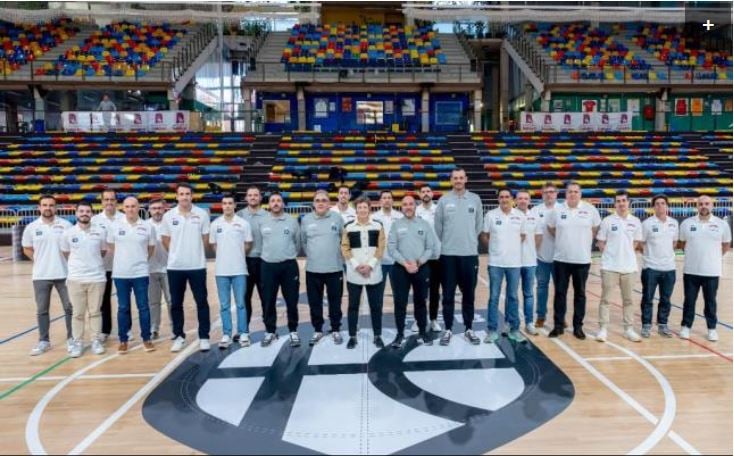
At first glance it looks like an ordinary press picture.
In reality it reveals something that is surprisingly rare.
Continuity.
Spain did not build that overnight. Long before Mateo took over the senior program, the foundations were laid under Sergio Scariolo. The objective was never only the next tournament. The objective was to build a long-term identity.
Youth teams were not isolated projects. The senior team was not a separate island. Coaches worked inside the same ecosystem, sharing terminology, ideas and principles from one age group to the next.
Over time that ecosystem started producing not only players but also coaches.
Names such as Dani Miret and Xavi Albert developed inside that structure and are now ACB coaches. They didn’t appear out of nowhere. They grew inside a system.
Finland offers another interesting reference point. For many years Henrik Dettmann invested heavily in developing coaches inside the Finnish national program. His focus went far beyond preparing the senior team for qualification games.
Dettmann built a coaching culture: clinics, collaboration between youth staffs and a shared basketball language across the federation. Several Finnish coaches who developed in that environment are now working across European basketball.
Which leads to a simple question.
How many federations could take the same picture Spain just published?
How many could gather the coaches of their U16, U18, U20 and senior national teams in one room months before the summer windows?
Which countries will still be assembling their staffs?
Identities and playing styles cannot be turned upside down during such short windows.
This doesn’t make coaching irrelevant. On the contrary.
These recent FIBA back-to-back confrontations were super interesting to follow because of the small wrinkles and adjustments coaches make in a span of a few days.
Small details that make a difference and reveal the thinking process behind a coaching staff.
A good example appeared in the Netherlands’ back-to-back series against Austria. No real chance of winning the jumpball in Game 1, so in Game 2 he places 2 players far away from the circle to steal the tip:
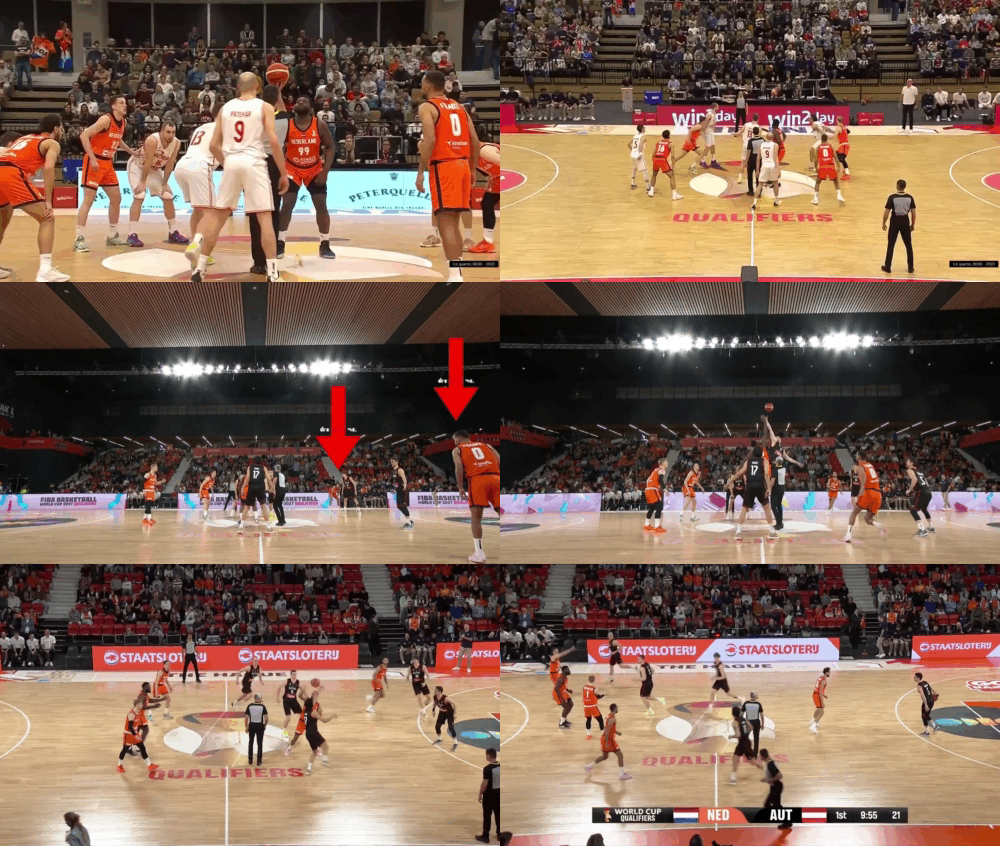
A while ago I wrote an article on strategies for the jumpball, this is another real example.
For coaches and front offices in clubs, international windows are often a moment to observe how different basketball cultures operate. Over the past weeks I used this window to work on a report analysing tactical trends and structural patterns in the Spanish ACB this season.
The report can be downloaded here.
Once the window ends, federations enter a moment of reflection and analysis.
Sometimes the key to a program is hidden in one picture.